
When North Carolina property owners start researching land clearing, they almost always ask the same question: what’s the difference between forestry mulching and traditional clearing, and which one do I need?
Both get the job done. But they work very differently, and for most properties in the Triangle and Piedmont regions of NC, one method consistently comes out ahead. Here’s the full breakdown.
Traditional Land Clearing: How It Works
Traditional land clearing uses a combination of equipment — bulldozers, chainsaws, skid steers, and sometimes excavators — to cut and push vegetation into piles. From there, debris is either burned (where permitted in NC), chipped on-site, or hauled off.
Stump removal is typically a separate step using a stump grinder. After all that, the land is usually graded.
It’s a multi-step, multi-crew process. It works, but it’s slow, it disturbs a lot of soil, and it generates significant debris that has to go somewhere.
Forestry Mulching: How It Works
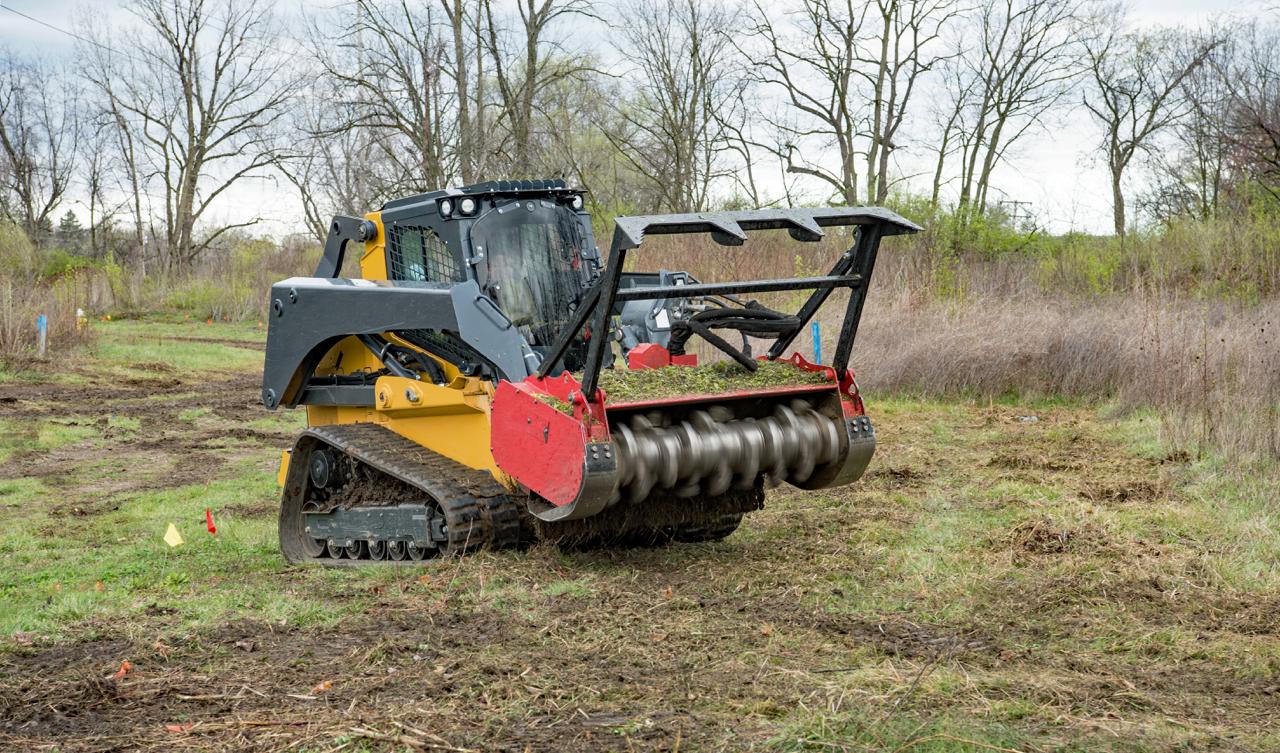
Forestry mulching uses a single machine — a purpose-built mulcher — to cut, grind, and process all vegetation in one pass. Trees, brush, stumps, and roots are all reduced to a layer of wood chip mulch that stays on the ground.
No burning. No hauling. No separate stump grinding. One machine, one mobilization, done.
At Land ClearCo, our mulching equipment handles trees up to 8–10 inches in diameter, dense understory, invasive species, and overgrown fence lines across Wake, Johnston, Durham, Chatham, and surrounding NC counties.
Head-to-Head Comparison for NC Properties
Cost
Forestry mulching is typically less expensive for most NC residential and agricultural jobs. The reason is simple: you’re paying for one machine and one crew instead of multiple pieces of equipment, separate stump grinding, and a debris haul-off. Once you add up all the line items in a traditional clearing bid, mulching usually wins on total cost for jobs under 10 acres.
Speed
Forestry mulching wins. A single-pass operation is faster than a multi-step process that requires coordination between multiple crews. For most Triangle-area lots, mulching cuts project time significantly.
Soil Health — Critical for NC’s Clay Soils
This is where forestry mulching wins by the largest margin. North Carolina’s Piedmont soils — especially in Wake, Johnston, and Chatham counties — are high in red clay. Traditional clearing with heavy equipment compacts and strips these soils badly, leaving you with bare, compacted ground that’s prone to erosion, poor drainage, and hard to establish grass or crops on afterward.
Forestry mulching leaves a layer of wood chip mulch that:
- Prevents erosion on NC’s sloped terrain
- Retains moisture during summer dry spells
- Gradually improves soil structure as it breaks down
- Suppresses weeds while new groundcover establishes
If you’re planning to seed pasture, establish a lawn, or prep for planting after clearing — the soil condition after mulching is dramatically better than after traditional clearing.
Environmental Compliance
Forestry mulching is cleaner in NC’s regulatory environment. Open burning is restricted in many NC counties (Wake County has strict burn bans during certain conditions). Mulching eliminates the burning question entirely. It also produces far less soil disturbance, which matters near creek buffers and in areas subject to NC erosion control rules.
When Traditional Clearing Makes More Sense
To be fair — there are scenarios where traditional clearing is the right call:
- Timber harvest jobs where you want to recover the value of large hardwoods or pines before clearing
- Very large stumps (12″+) that need full removal for deep foundation or septic work
- Sites requiring significant grading immediately after clearing where the mulch layer would interfere
For the majority of residential lots, rural acreage, farm and pasture reclamation, and light commercial prep in the NC Triangle? Those exceptions don’t apply.
The Bottom Line for Triangle-Area Property Owners
Forestry mulching is faster, typically less expensive, better for your soil, and more environmentally responsible than traditional clearing for most jobs in North Carolina. It’s why we recommend it to the majority of our customers across Wake, Durham, Johnston, Orange, Chatham, and surrounding counties.
The best way to know which method is right for your specific property is to have someone walk it with you.
Get a free assessment and honest recommendation from Land ClearCo.
Request your free estimate here — we’ll tell you exactly which approach makes sense for your land and give you a clear, straightforward quote.
