
Selma occupies a strategically central position in Johnston County, directly adjacent to Smithfield and just off I-95 at the US-70 interchange. The town has seen consistent growth in industrial and commercial development along the I-95 corridor, while its residential base continues to expand as buyers priced out of the Triangle look for affordability in Johnston County.
Selma occupies a strategically central position in Johnston County, directly adjacent to Smithfield and just off I-95 at the US-70 interchange. The town has seen consistent growth in industrial and commercial development along the I-95 corridor, while its residential base continues to expand as buyers priced out of the Triangle look for affordability in Johnston County.
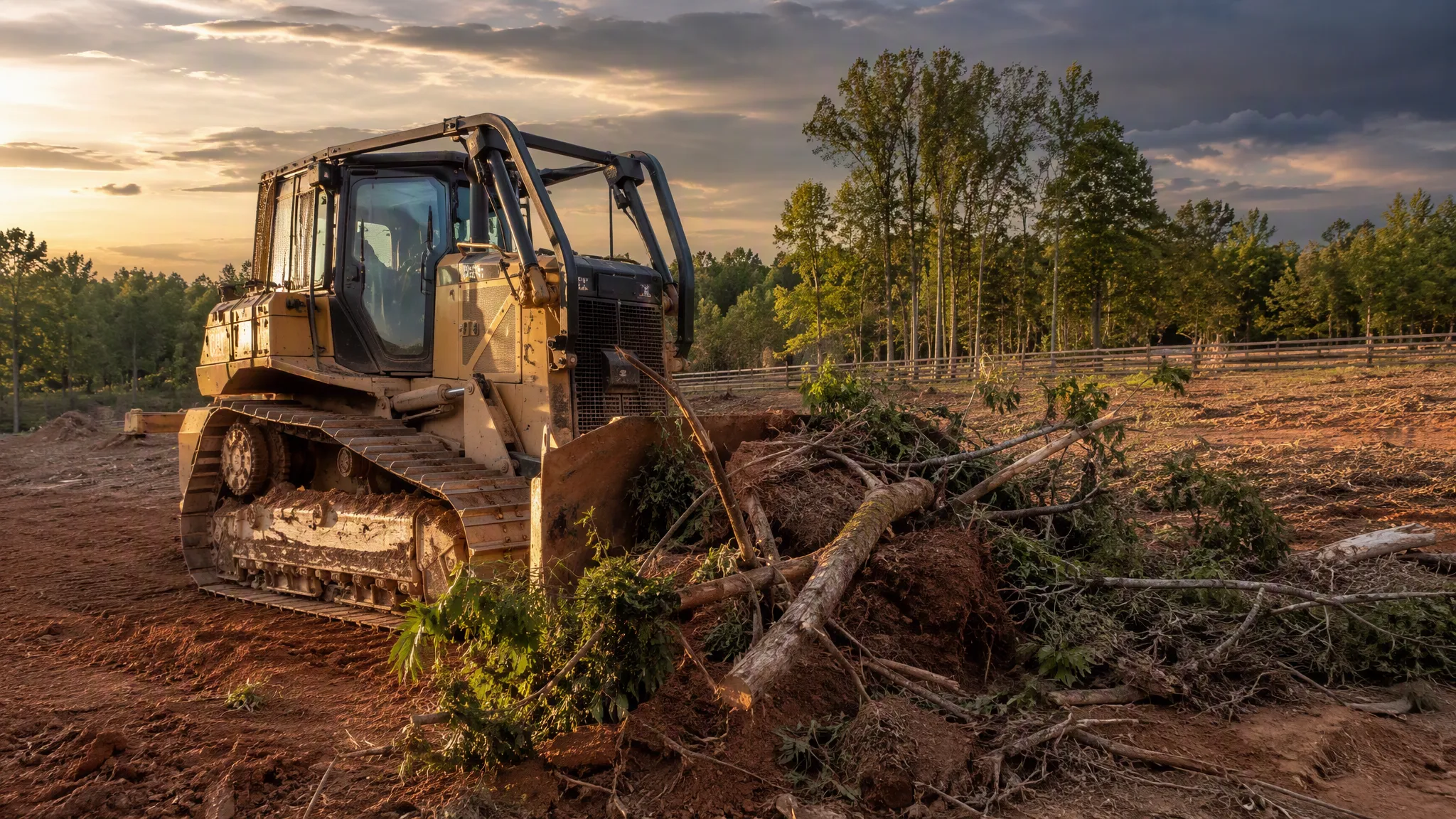
Selma’s land base is predominantly agricultural and rural residential — tobacco, soybeans, and pine timber have historically defined the land use here, but conversion to residential and light industrial use is accelerating. Land clearing in Selma, NC often means working on large rural tracts being subdivided, old field margins grown up in loblolly pine and sweetgum, and commercial sites along the US-70 and I-95 corridors being prepped for development.
The range of land clearing work in Selma reflects Johnston County’s character: working farms, rural homesteads, and industrial sites coexisting within a few miles of each other.
Agricultural landowners along Brogden Road and Keen Road regularly need overgrown hedgerows, field margins, and pine thickets cleared to reclaim productive farmland.
Residential clearing is active in the communities developing south and east of town, where large wooded lots are being prepared for new construction. Light industrial and commercial site clearing along the US-70 Business corridor and near the Selma-Smithfield area is also common, driven by distribution and logistics development tied to the I-95 interchange.
Johnston County soils around Selma are primarily Goldsboro, Norfolk, and Lynchburg sandy loams — better-draining than the piedmont clays to the west, but with shallow water tables in lower-lying areas that create equipment access challenges during wet months.
The Little River and its tributaries pass through Johnston County, and riparian buffer requirements apply to any clearing near these waterways.
Forestry mulching is the method of choice for Selma land clearing because it works efficiently in the mixed loblolly pine and hardwood stands common here, leaves behind a mulch layer that suppresses kudzu and broomsedge regrowth on converted agricultural land, and avoids the debris management complications of conventional clearing on rural sites.
Agricultural land reclamation — clearing overgrown field margins and hedgerows along Brogden Road and Keen Road
Wooded lot clearing for residential development east and south of town
Commercial site prep along US-70 Business and near the I-95/US-70 interchange
Pine thicket and hardwood clearing on rural tracts being converted to homesites
Invasive species (kudzu, Chinese wisteria, multiflora rose) removal from farm and rural properties
Fencerow clearing and pasture restoration for working farms in Johnston County
Serving Johnston County from our Knightdale base allows us to quickly mobilize equipment and crews to Selma, Smithfield, and surrounding rural communities.
We regularly handle agricultural land conversion, pasture restoration, field-edge clearing, and large rural tract projects throughout Johnston County.
Forestry mulching is ideal for Selma's mix of pine timber, overgrown farmland, and rural residential lots because it clears efficiently while minimizing cleanup and soil disturbance.
Land ClearCo is fully licensed and insured for residential, agricultural, commercial, and industrial land clearing projects throughout Johnston County.
Our process leaves behind a clean mulch layer that suppresses invasive regrowth and avoids the large debris piles and hauling logistics common with traditional clearing methods.
Free quotes by phone, text or the form — most returned within one business day. Call 984-224-7995.