
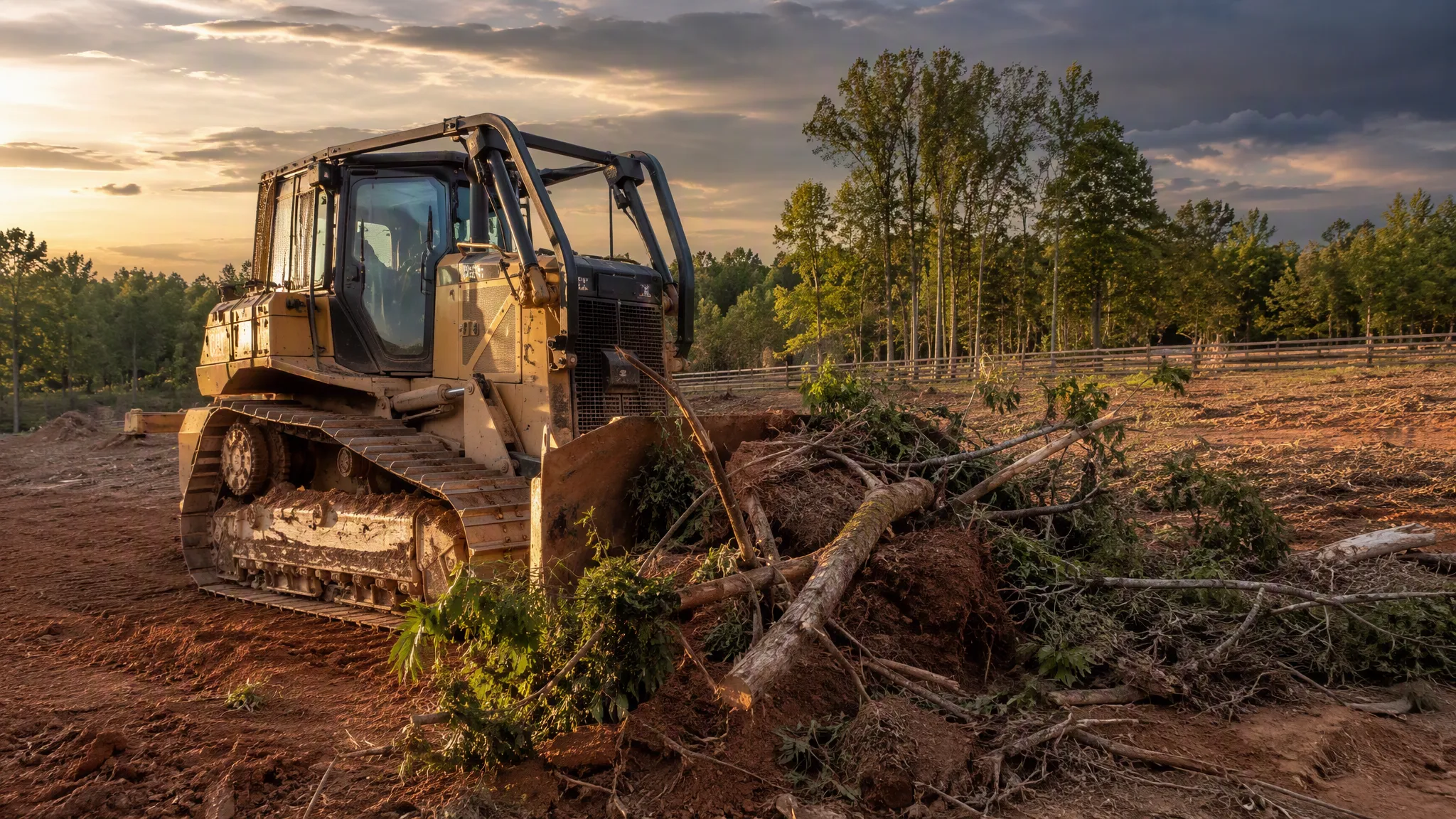
Wake Forest isn’t just growing — it’s been North Carolina’s fastest-growing town for multiple years running, with subdivisions stretching north toward Youngsville and east toward Rolesville at a pace that strains every trade contractor in the market. New streets appear where pine forest stood six months ago. Agricultural tracts along Rogers Road, Burlington Mills Road, and Capital Boulevard are being subdivided faster than infrastructure can keep up. If you’re a builder, developer, or homeowner in Wake Forest trying to get a lot cleared and ready, you need a crew that can show up, move efficiently, and deliver a site that’s ready for the next phase — not a contractor who puts you third on the list.
Wake Forest isn’t just growing — it’s been North Carolina’s fastest-growing town for multiple years running, with subdivisions stretching north toward Youngsville and east toward Rolesville at a pace that strains every trade contractor in the market. New streets appear where pine forest stood six months ago. Agricultural tracts along Rogers Road, Burlington Mills Road, and Capital Boulevard are being subdivided faster than infrastructure can keep up. If you’re a builder, developer, or homeowner in Wake Forest trying to get a lot cleared and ready, you need a crew that can show up, move efficiently, and deliver a site that’s ready for the next phase — not a contractor who puts you third on the list.
Wake Forest’s clearing work is overwhelmingly driven by residential subdivision development — we’re talking multi-hundred-lot master-planned communities that require systematic lot-by-lot clearing as builders close and start construction. Beyond subdivision work, established homeowners in older Wake Forest neighborhoods (Heritage, Hasentree, Traditions) frequently need clearing for lot improvements, fence line cleanups, and naturalized buffer management. Commercial clearing along the Capital Boulevard and US-1 bypass corridors adds to the mix as the town’s retail and office market expands to serve its booming population.
Northern Wake County sits at the transition between the Piedmont plateau and the slightly more elevated terrain toward the Franklin County line, with soils that run from sandy loam to heavier red clay depending on the specific location. Loblolly pine is the dominant species on revegetated agricultural land, while older wooded tracts carry significant white oak, red oak, and sweetgum. Forestry mulching handles both efficiently — pine thickets can be mowed down at volume, while mixed hardwood areas benefit from the selective capability of a mulching head that can work between trees that should stay. Falls Lake watershed rules affect drainage from much of northern Wake Forest, which makes erosion-minimizing mulching the preferred method for any clearing near drainage corridors.
We understand builder timelines — when a production builder needs 12 lots cleared in a two-week window, we build the schedule around their starts, not the other way around.
Northern Wake Forest drains toward Falls Lake, a drinking water reservoir with specific riparian buffer and erosion rules; we clear with those rules built into our process.
Heritage, Hasentree, and Holding Village HOA communities have standards; we work within them and leave finished sites that match neighborhood aesthetics.
Properties on the Wake-Franklin county line have unique jurisdictional considerations — we know both counties and clear accordingly.
We regularly clear former tobacco fields and pastureland that have revegetated with scrub pine and invasive species — a common scenario in the Wake Forest growth zone.
Free quotes by phone, text or the form — most returned within one business day. Call 984-224-7995.