
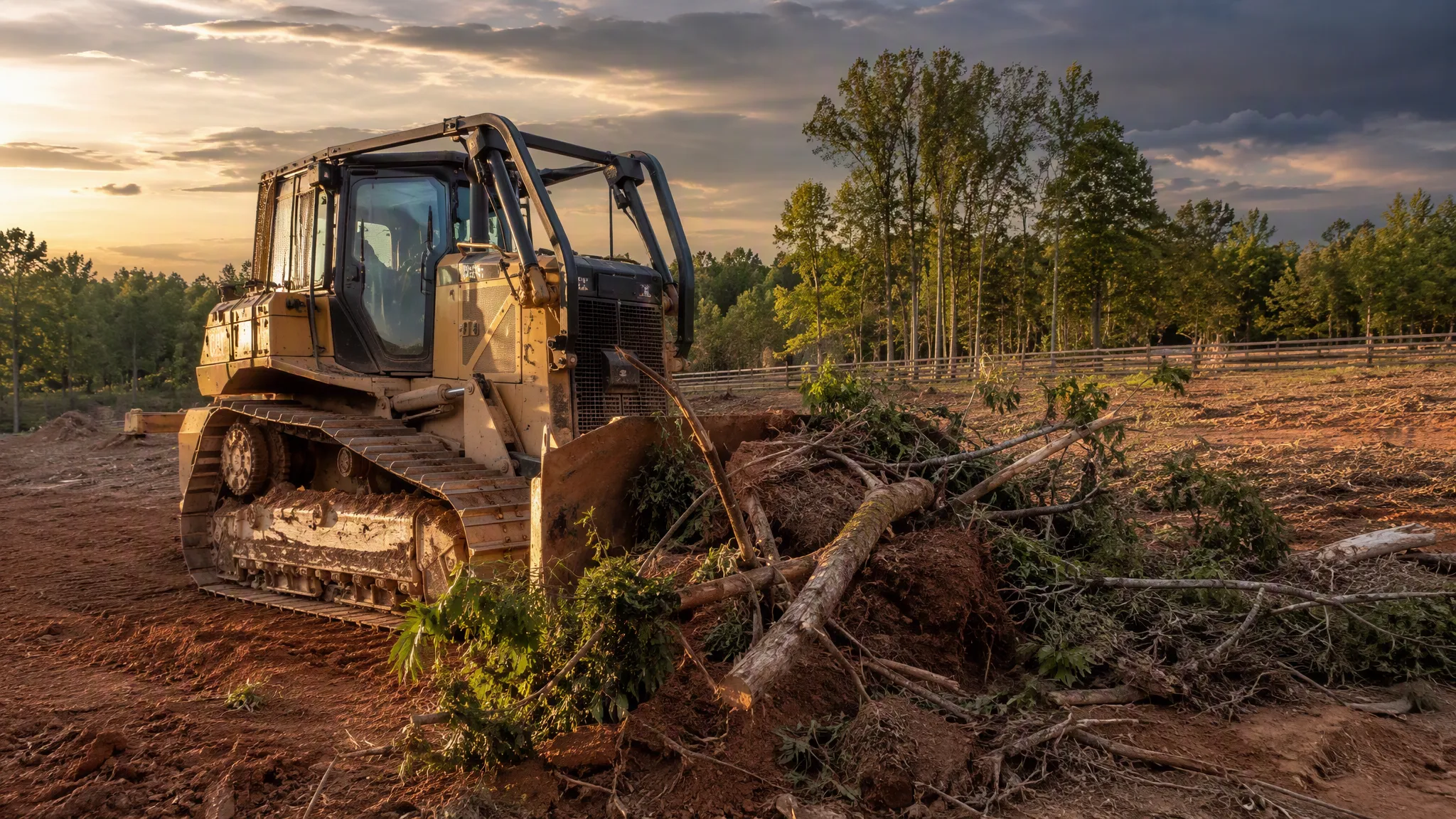
Louisburg is the kind of county seat that still means something in North Carolina — a genuine small town with a historic courthouse square, surrounded by Franklin County’s rural fabric of small farms, wooded acreage, tobacco allotment land, and family tracts that have changed hands (or haven’t) for generations. The land clearing work in Franklin County isn’t driven by subdivision pressure the way Wake County is — it’s driven by property owners who want to make their land usable, productive, and manageable for the long term. That means clearing homesites from wooded lots, reclaiming overgrown farmland, establishing hunting tracts, and maintaining the agricultural land that defines Franklin County’s identity.
Louisburg is the kind of county seat that still means something in North Carolina — a genuine small town with a historic courthouse square, surrounded by Franklin County’s rural fabric of small farms, wooded acreage, tobacco allotment land, and family tracts that have changed hands (or haven’t) for generations. The land clearing work in Franklin County isn’t driven by subdivision pressure the way Wake County is — it’s driven by property owners who want to make their land usable, productive, and manageable for the long term. That means clearing homesites from wooded lots, reclaiming overgrown farmland, establishing hunting tracts, and maintaining the agricultural land that defines Franklin County’s identity.
Louisburg area clearing work is rural residential and agricultural in character. Property owners are clearing wooded lots for homebuilding — Franklin County has seen growing interest from buyers wanting rural acreage within commute distance of the Triangle. Agricultural land that’s transitioned out of tobacco production is being reclaimed for other uses — livestock pasture, hay production, or simply better-managed woodland. Hunting tract development is significant in Franklin County, where large wooded parcels support deer and turkey populations that landowners want to actively manage through habitat clearing, food plot establishment, and trail systems.
Franklin County’s soils reflect its position at the Piedmont-Coastal Plain transition — Cecil and Appling red clay soils on the uplands, transitioning to sandy loam and loamy sand as terrain flattens toward the county’s eastern portions. The Tar River and its tributaries including Sandy Creek drain much of Franklin County, creating riparian corridors with dense vegetation and erosion-sensitive stream banks. Forestry mulching is the right approach for Franklin County properties: the mulch layer protects red clay uplands from erosion while providing immediate organic matter contribution to soil that may have been depleted by decades of intensive tobacco cultivation. The lack of debris hauling cost is particularly valuable for rural properties where haul distances are long.
We work Franklin County's mix of wooded acreage, small farms, and hunting tracts regularly — this isn't a market we visit occasionally.
Former tobacco ground with established hedgerows, shade trees, and barn sites requires thoughtful clearing that accounts for the property's agricultural history.
Food plots, shooting lanes, access trails, and water feature clearing on Franklin County hunting properties are core services for us.
The area around Louisburg College and the town's residential growth zone sees homesite clearing on wooded in-town lots that require precision.
Franklin County's river corridors have enforceable riparian rules; we clear to the legal edge and leave buffer zones intact and healthy.
Free quotes by phone, text or the form — most returned within one business day. Call 984-224-7995.