
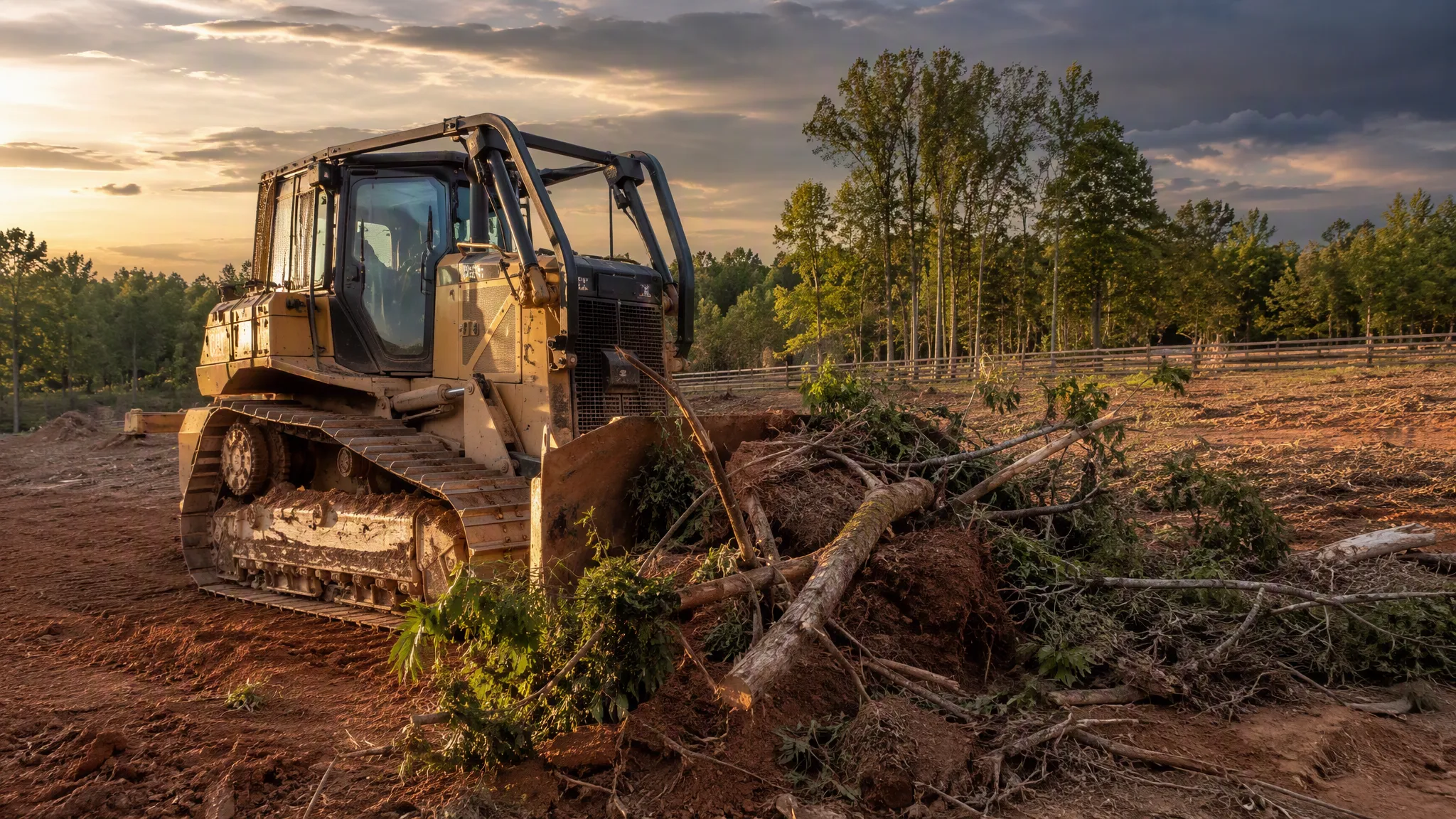
Wendell sits on the eastern edge of Wake County along US-64 Business, roughly 20 minutes from Knightdale and 30 from downtown Raleigh. The town has grown significantly as housing costs push buyers eastward, with new residential development along Wendell Falls Parkway and the communities feeding off Rolesville Road and Buffalo Road creating a wave of new construction.
Wendell sits on the eastern edge of Wake County along US-64 Business, roughly 20 minutes from Knightdale and 30 from downtown Raleigh. The town has grown significantly as housing costs push buyers eastward, with new residential development along Wendell Falls Parkway and the communities feeding off Rolesville Road and Buffalo Road creating a wave of new construction.
Unlike the denser western suburbs, Wendell retains a significant amount of agricultural land and large rural lots — many of which are being subdivided or improved by owners who want to convert wooded acreage to usable lawn, pasture, or building sites. Land clearing in Wendell, NC often involves larger tract work than you’d find in Cary or Morrisville — 3-to-20-acre clearings are common here.
The clearing work in Wendell spans residential, agricultural, and light commercial categories. Wendell Falls, one of Wake County’s larger master-planned communities, has generated significant clearing demand as construction continues on undeveloped phases along Wendell Falls Parkway.
Outside of planned developments, owner-operators with rural Wake County land along Pearces Road and Wendell-Zebulon Road regularly need clearing for new homes, equipment sheds, and pasture conversion.
Small commercial sites along US-64 Business are also being cleared for retail and service industry development as the town’s commercial corridor fills in. Agricultural landowners in the area frequently need overgrown fencerows, field margins, and wooded lot corners cleaned up.
Wendell’s soils are primarily Appling, Cecil, and Norfolk sandy loams transitioning to the Coastal Plain, with better drainage than the heavy clays found in western Wake County.
The Neuse River headwaters begin not far east of Wendell, and the town’s proximity to Swift Creek and its tributaries means riparian buffer rules from the Neuse River Basin management plan apply to many properties.
Forestry mulching is the preferred method for land clearing near Wendell because it handles the mixed pine-hardwood stands common here — loblolly pine, sweetgum, and tulip poplar are the dominant species — without the debris hauling logistics that make conventional clearing expensive on rural lots where burn piles are no longer permitted in most of Wake County.
Large wooded tract clearing for residential development along Wendell Falls Parkway
Agricultural land conversion — converting wooded acreage to pasture or building pads along Pearces Road
Fencerow and field margin clearing for working farms in eastern Wake County
Wooded lot prep for new homes along Wendell-Zebulon Road and Buffalo Road
Invasive species (kudzu, privet, Chinese wisteria) removal from rural and semi-rural properties
Commercial site prep along the US-64 Business corridor
Based in Knightdale, we're practically neighbors, allowing us to mobilize quickly for projects throughout Wendell and eastern Wake County without excessive travel costs.
We regularly handle larger rural clearing projects ranging from 3-to-20-acre tracts, including pasture conversion, wooded acreage clearing, and agricultural land improvement.
Our forestry mulching process is ideal for rural and semi-rural properties because it clears dense vegetation while preserving soil structure and minimizing cleanup costs.
Land ClearCo is fully licensed and insured for residential, agricultural, commercial, and rural land clearing projects throughout Wake County.
We provide clean, efficient clearing for wooded lots, fencerows, overgrown field edges, and development sites without the excessive debris piles and site damage common with traditional clearing methods.
Free quotes by phone, text or the form — most returned within one business day. Call 984-224-7995.