
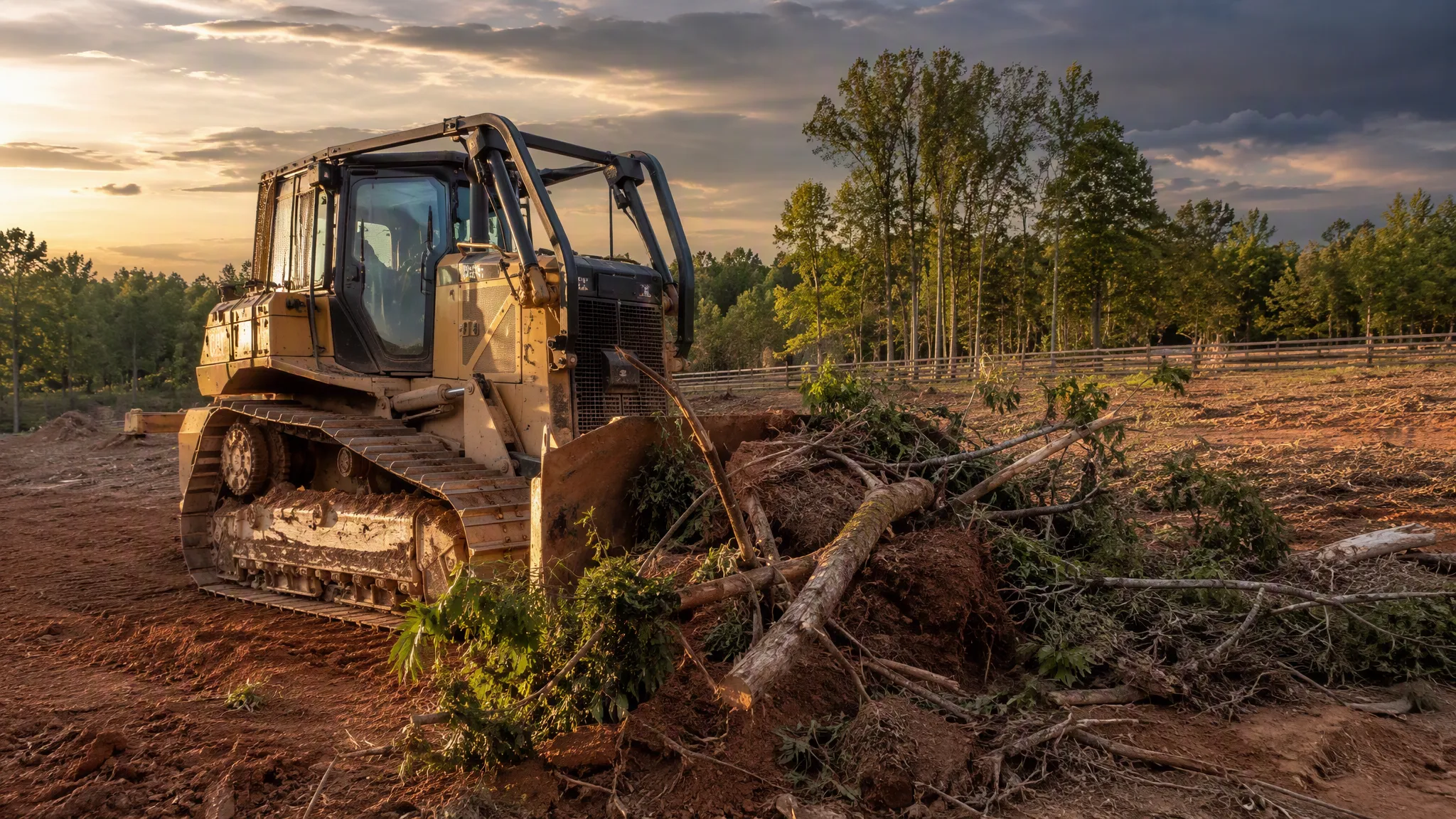
Durham is a city in full reinvention — Research Triangle Park expanding, the American Tobacco Campus and downtown Durham drawing corporate relocations, Duke University anchoring a world-class medical research corridor, and gentrifying neighborhoods seeing infill development pressure across the city. The land clearing dimension of all this growth is significant: overgrown lots in historic neighborhoods, wooded parcels near RTP being converted for life science campuses, and established residential properties where invasive species have taken root in the mature tree canopy. Durham’s urban forest is genuinely valued here — clearing work that damages mature trees or strips topsoil creates real community backlash.
Durham is a city in full reinvention — Research Triangle Park expanding, the American Tobacco Campus and downtown Durham drawing corporate relocations, Duke University anchoring a world-class medical research corridor, and gentrifying neighborhoods seeing infill development pressure across the city. The land clearing dimension of all this growth is significant: overgrown lots in historic neighborhoods, wooded parcels near RTP being converted for life science campuses, and established residential properties where invasive species have taken root in the mature tree canopy. Durham’s urban forest is genuinely valued here — clearing work that damages mature trees or strips topsoil creates real community backlash.
Durham’s clearing work ranges from tight urban infill lots in Old North Durham and Cleveland-Holloway neighborhoods to large institutional and commercial land prep near the Duke University medical campus and RTP perimeter. The Eno River corridor in northern Durham creates significant riparian clearing demand — managing invasive species and maintaining access without damaging the river’s ecosystem. Residential clearing in established neighborhoods often involves removing invasive understory (Japanese honeysuckle, Chinese privet, English ivy) while preserving the mature white oak, willow oak, and American beech canopy trees that define Durham’s older neighborhoods.
Durham County sits firmly in the Piedmont, with clay-heavy soils (Enon, Mecklenburg, and Georgeville series) that are notorious for compaction under heavy equipment. The city’s strong environmental culture and tree preservation ordinances make conventional clearing approaches difficult to defend — residents and city staff notice when clearing goes wrong. Forestry mulching’s ability to work around existing trees while removing understory brush and invasive species makes it the only viable method for many Durham jobs. The Eno River and its tributaries are protected under state rules, and mulching’s erosion control properties are essential for any clearing in proximity to the city’s sensitive water corridors.
Durham's established tree canopy is often underlain by dense invasive understory — privet, honeysuckle, ivy — that we remove selectively while leaving mature trees untouched.
Durham's tree preservation rules are real and enforced; we work within them to remove what's targeted without creating canopy violations.
The Eno River corridor is one of Durham's most sensitive natural areas; we know how to manage vegetation near it within state and local rules.
Life science and tech campus site prep near Research Triangle Park requires meeting contractor qualification standards; we're equipped for commercial-scale clearing work.
Tight Durham infill lots in established neighborhoods require equipment precision and debris management that respects neighboring properties.
Free quotes by phone, text or the form — most returned within one business day. Call 984-224-7995.