
Cary has a well-earned reputation for meticulous planning — SAS Institute didn’t build its global headquarters here by accident, and the town’s decades-long commitment to green space, manicured streetscapes, and strict development standards has shaped a community where land clearing isn’t just about getting brush out of the way. It’s about doing it right, cleanly, without leaving a torn-up moonscape behind. Whether you’re a homeowner clearing a rear lot line to reclaim usable yard, a developer prepping a commercial pad near Crossroads Plaza, or an HOA board dealing with a common-area naturalized buffer that’s become invasive-dominated, Cary requires a different level of care.
Cary has a well-earned reputation for meticulous planning — SAS Institute didn’t build its global headquarters here by accident, and the town’s decades-long commitment to green space, manicured streetscapes, and strict development standards has shaped a community where land clearing isn’t just about getting brush out of the way. It’s about doing it right, cleanly, without leaving a torn-up moonscape behind. Whether you’re a homeowner clearing a rear lot line to reclaim usable yard, a developer prepping a commercial pad near Crossroads Plaza, or an HOA board dealing with a common-area naturalized buffer that’s become invasive-dominated, Cary requires a different level of care.
Most of Cary’s land clearing work centers on three scenarios: residential lot improvements within established HOA communities, commercial site prep along the Walnut Street and Harrison Avenue corridors, and naturalized buffer restoration in communities where common-area wooded zones have been overtaken by invasive species like Chinese privet, English ivy, or Bradford pear. Cary also has a significant number of larger estate lots — particularly in western Cary toward Apex — where homeowners want to open up views, establish lawns, or create recreational clearings within partially wooded properties.
Cary’s landscaping standards and HOA requirements make forestry mulching the go-to method for nearly every clearing job in town. The process doesn’t disturb the underlying grade or topsoil, which matters when you’re working next to established landscape beds, irrigation systems, or HOA-required plantings. The mulch left behind also suppresses weed regrowth — critical in a town where neighbors and HOA inspectors notice everything. Jordan Lake watershed rules affect much of western Cary, and forestry mulching’s erosion control benefits are particularly valuable for lots with any drainage toward Swift Creek or Middle Creek.
We operate cleanly, communicate with HOA contacts when needed, and leave sites looking finished — not like a construction zone.
Western Cary properties often fall within Jordan Lake nutrient rules; we know how to clear without triggering erosion or runoff violations.
We've prepped commercial sites in Cary's tech and office corridors where site aesthetics and timeline precision are non-negotiable.
Large western Cary lots on Cary Parkway, Kildaire Farm Road, and Green Level Church Road often have mature mixed hardwood-pine canopy we can selectively thin without full clearing.
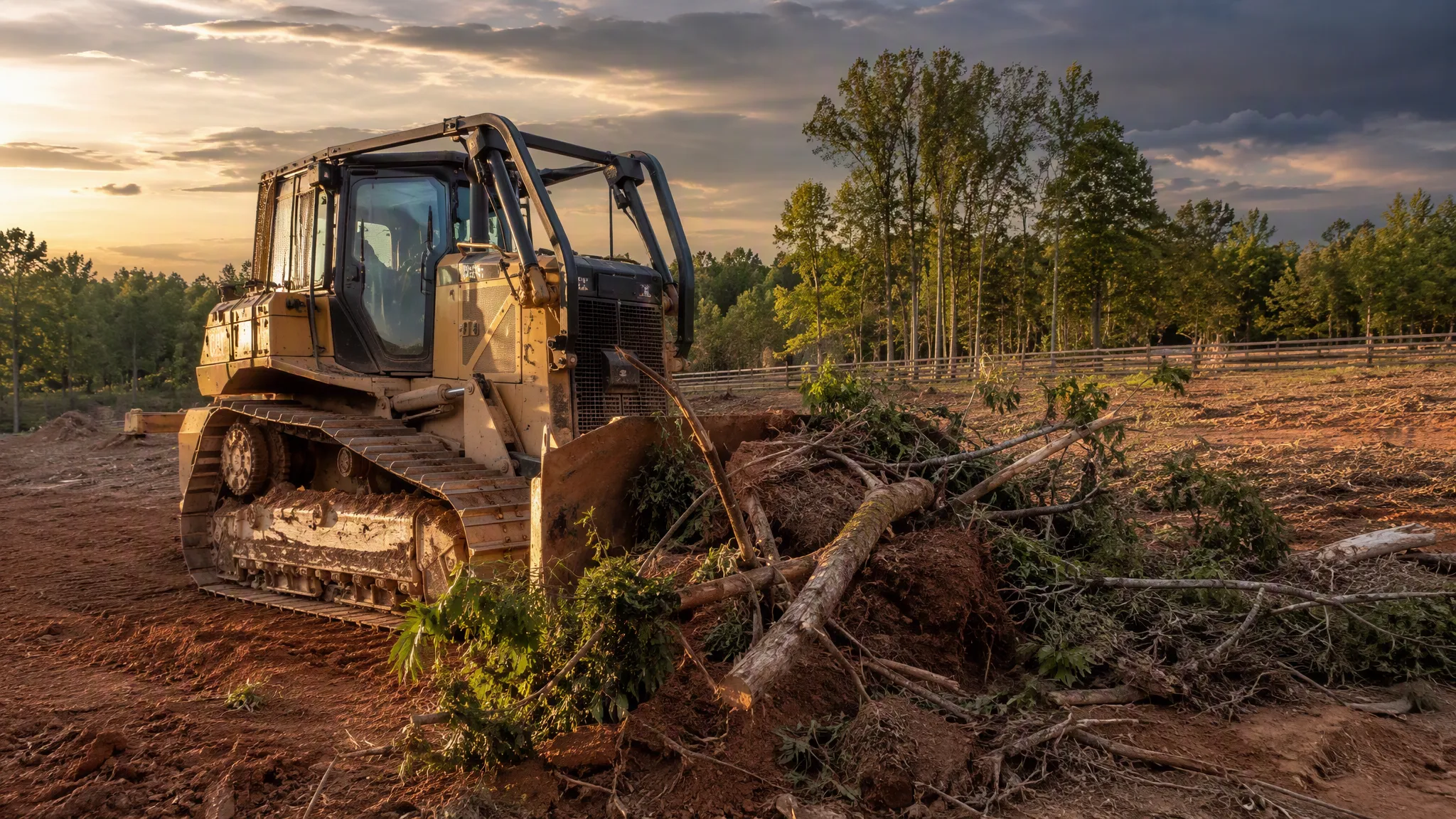
No heavy dozer work, no ruts, no topsoil loss — Cary's dense neighborhood fabric means your neighbors and HOA won't have anything to complain about.
Free quotes by phone, text or the form — most returned within one business day. Call 984-224-7995.