
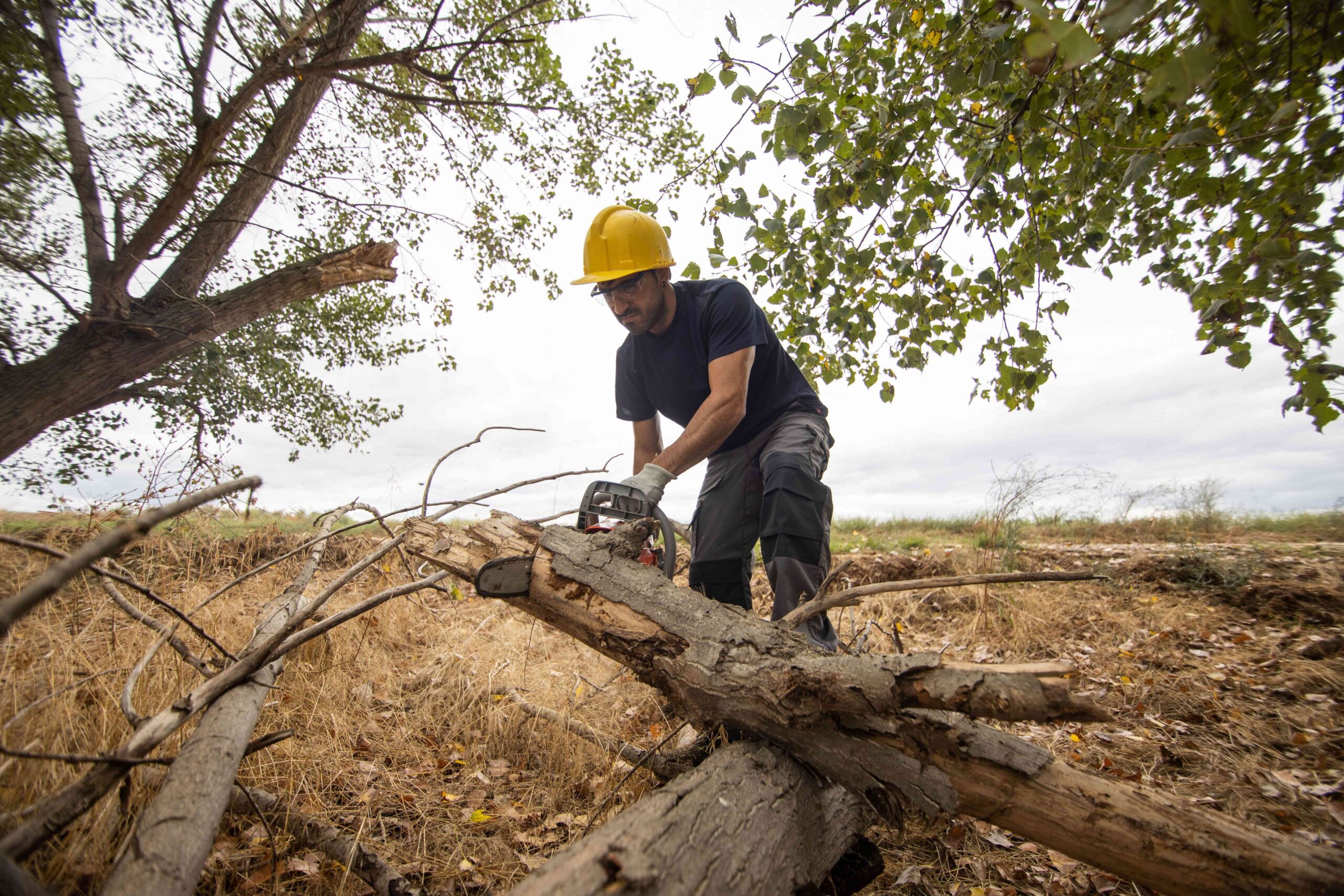
North Carolina sees significant storm activity — tropical systems tracking inland from the coast, severe thunderstorm lines moving through the Triangle in summer, and ice storms in winter that snap limbs and drop trees across the Piedmont. When a storm moves through Wake County or surrounding counties, the damage to wooded properties can be substantial and the cleanup daunting. Land ClearCo provides disaster recovery and storm damage clearing services to help property owners get back to normal quickly.
What Storm Damage Clearing Involves in NC
Storm damage on a wooded property typically falls into a few categories. Fallen trees are the most visible — large trees that have come down across driveways, fences, structures, or open land. Hanging limbs and widow makers are often the more dangerous problem — limbs partially broken and suspended in the canopy that are likely to fall with any additional wind or disturbance. Debris fields from wind-stripped branches and downed material cover significant areas and need to be cleared before the property is safe and usable.
The scale of storm damage clearing varies enormously. A single storm can drop a handful of trees on a residential lot or create widespread damage across dozens of acres on a larger rural property. The right approach — and the right equipment — depends on what the storm left behind.
Why Quick Response Matters After a Storm
Hanging limbs and partially fallen trees are active safety hazards. They can shift and fall without warning, putting anyone on the property at serious risk. Getting a damaged property assessed and cleared quickly is not just about aesthetics or convenience — it is about safety. Land ClearCo responds to storm damage clearing requests throughout the Triangle area and can mobilize quickly when conditions are urgent.
Beyond safety, quick clearing also protects the property itself. A tree lying across a fence line is still a fence that needs to be repaired — but a tree lying there for months while the wood rots becomes a significantly harder cleanup. Addressing storm damage promptly limits the secondary damage that comes from leaving debris in place.
Forestry Mulching for Storm Debris
For storm damage that involves significant debris across a larger area, forestry mulching is often the most efficient cleanup method available. Rather than cutting, piling, and hauling debris — which requires multiple passes and significant truck traffic — a drum mulcher processes the fallen material directly into mulch on-site. For properties with widespread debris fields, this approach is dramatically faster and less disruptive than traditional cleanup methods.
Serving Wake County and the Triangle After Storm Events
Land ClearCo serves property owners throughout the Raleigh-Durham Triangle for disaster recovery and storm damage clearing — Wake County, Durham, Johnston, Chatham, Harnett, Franklin, and surrounding NC counties. Get an instant estimate at Estimates.landclearco.com or call 984-224-7995.
