
Trail development is one of the more rewarding land clearing projects a property owner can undertake — and one of the more specific ones. Cutting a walking path through the woods, opening a riding trail on a rural acreage property, or creating hunting access routes through timber requires a different approach than clearing a building site or reclaiming an overgrown field. Done right, trail development enhances your property without disturbing it. Here is what North Carolina property owners need to know.
What Trail Development Actually Involves
Trail clearing is selective work. The goal is to open a usable corridor through existing vegetation while preserving the surrounding trees, natural features, and character of the landscape. A trail that looks and feels like a natural path through the woods is fundamentally different from a bare dirt road — and achieving that result requires intentional planning and the right equipment.
Trail width is the first decision. Walking trails typically run 4 to 6 feet wide. Equestrian trails need 8 to 10 feet with additional overhead clearance for riders. ATV or UTV access trails run wider still. The intended use drives the clearing scope.
Overhead clearance is the second consideration. Most trail users want to walk or ride without ducking — that means removing low-hanging branches and managing canopy height along the entire corridor, not just clearing the ground-level brush.
Ground-level clearing removes the brush, briars, vines, and understory growth that make a path impassable. In Wake County and the surrounding Triangle area, Japanese honeysuckle, Virginia creeper, and greenbriar are the primary obstacles on most wooded properties.
Equipment for Trail Development in NC
Forestry mulching is the most common and most efficient method for trail development on North Carolina properties. A drum mulcher clears the corridor in a single pass — grinding the understory growth and low brush into mulch without disturbing the surrounding trees or ground. The mulch layer left in the trail bed is actually beneficial: it provides a natural walking surface, suppresses regrowth, and decomposes over time to improve soil health.
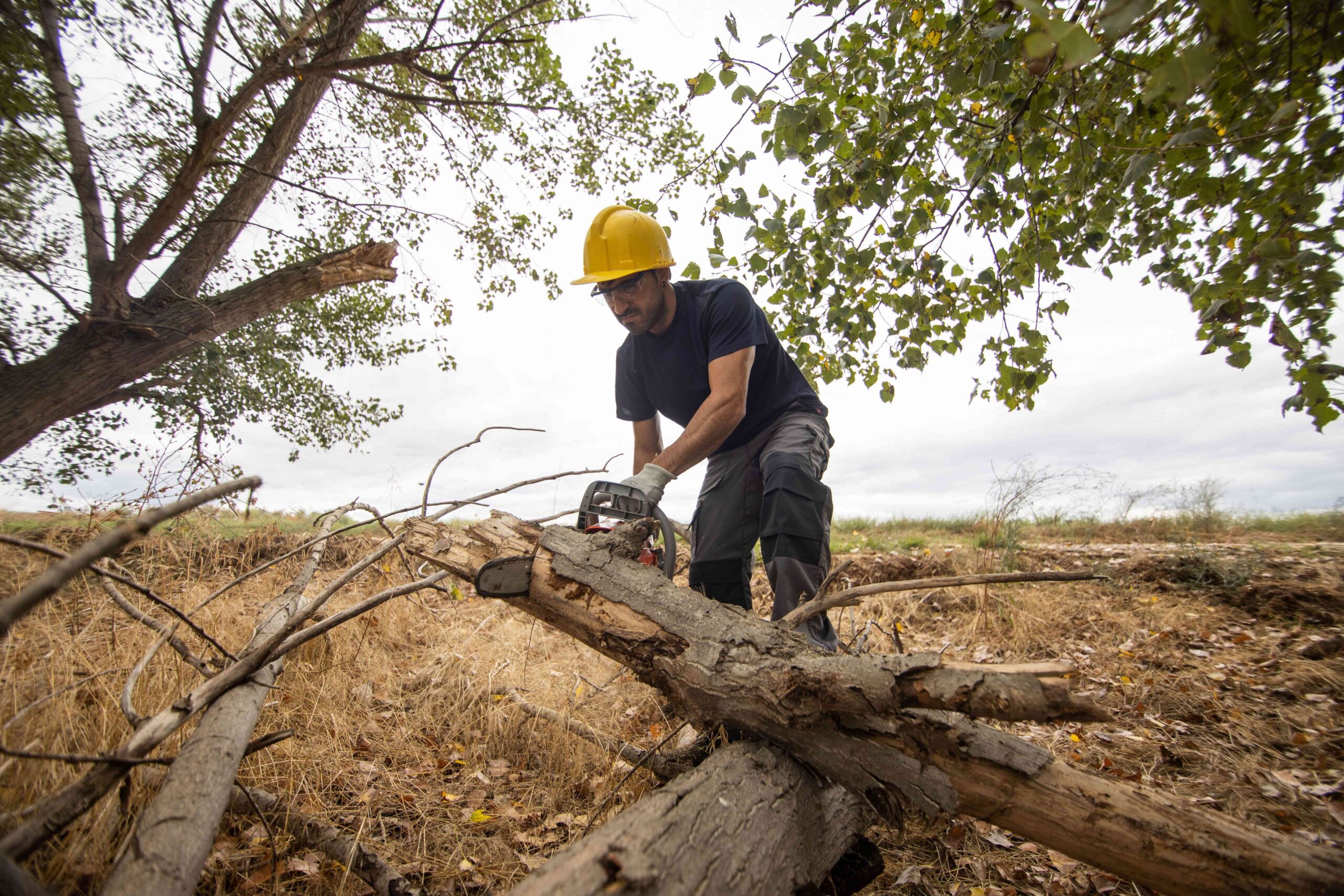
For trails with tighter overhead clearance requirements or areas where large trees need selective removal, hand work with chainsaws supplements the mechanical clearing. The approach depends on the specific trail layout and vegetation encountered.
Trail Maintenance After Initial Development
A cleared trail does not stay clear on its own — particularly in North Carolina where warm summers and abundant rainfall push vegetation growth hard. Annual or biannual maintenance clearing keeps a trail usable and prevents the initial clearing investment from being reclaimed by brush. Scheduled maintenance is significantly less expensive than reclaiming a fully overgrown trail.
Serving the Triangle and Surrounding NC Counties
Land ClearCo handles trail development and clearing throughout Wake County and surrounding North Carolina counties. Get an instant estimate at Estimates.landclearco.com or call 984-224-7995.
