
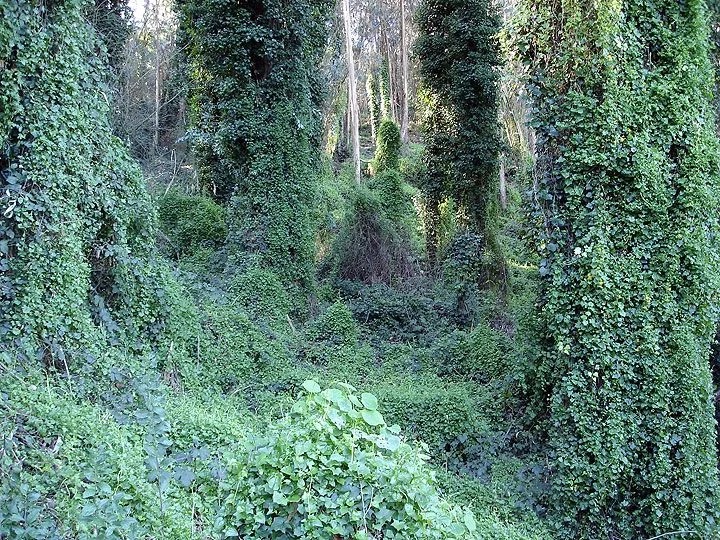
If you’ve got English ivy on your property in North Carolina, you already know it’s not just a ground cover — it’s a takeover. Left unchecked, English ivy climbs trees, smothers native plants, and turns usable land into a tangled mess that gets worse every season.
Here’s everything you need to know about removing English ivy from your NC property — and why calling a professional is almost always the smarter move.
Why English Ivy Is a Problem in North Carolina
English ivy (Hedera helix) is classified as an invasive species in North Carolina and across much of the Southeast. It spreads aggressively through both runners along the ground and seeds distributed by birds, which means it doesn’t stay where you plant it — it migrates.
Here’s what it does to your property:
- Tree damage: Ivy climbing up tree trunks adds significant weight, traps moisture against the bark, and eventually kills the tree. Mature oaks, pines, and hardwoods that take decades to grow can be lost in just a few years to ivy infestations.
- Smothers native plants: The dense mat ivy creates on the ground shades out native wildflowers, seedlings, and ground cover — reducing biodiversity and leaving your landscape with nothing but ivy.
- Creates pest habitat: The thick mat is ideal habitat for rodents, snakes, and insects. Dense ivy on a residential property is a known harborage area for mosquitoes and ticks.
- Masks property hazards: Ivy hides uneven ground, old stumps, debris, and drainage issues — creating liability and maintenance problems that are invisible until someone trips or water backs up.
- Reduces property value: A property overrun with invasive ivy looks neglected and signals underlying maintenance problems to buyers and appraisers.
The Challenge of DIY English Ivy Removal
English ivy removal sounds simple — pull it out, spray it, done. In practice, it’s one of the most labor-intensive landscape jobs there is, and DIY attempts frequently fail.
The problems:
- Root system: Ivy develops an extensive root system over time. Pulling the vines without removing the roots leaves the plant fully capable of regrowth — often thicker than before.
- Scale: On established properties with years of ivy growth, the coverage area is enormous. What looks like a manageable patch is often connected underground across hundreds of square feet.
- Regrowth: Even small root fragments left in the soil will resprout. Effective removal requires follow-up treatment over multiple growing seasons.
- Tree vines: Ivy climbing trees should never just be pulled off — doing it wrong can damage the bark and introduce disease. The vines need to be cut at the base and left to die on the tree before removal.
- Disposal: Ivy pulled and left on the ground can re-root. All removed material needs to be properly bagged or chipped — not composted, as ivy can survive composting and re-establish.
Professional English Ivy Removal: What It Looks Like
A professional approach to English ivy removal combines mechanical removal with targeted follow-up treatment:
- Assessment: Map the full extent of the infestation — ground coverage, tree involvement, and proximity to desirable plants you want to preserve.
- Tree vines first: Cut ivy at the base of every affected tree and create a 3-4 foot “lifesaver ring” of cleared ground around the trunk. Leave the dead vine attached to the tree — it will dry out and fall away on its own over the following months.
- Ground ivy removal: Remove the ivy mat mechanically, including as much root mass as possible. For large areas, specialized equipment can clear ground ivy significantly faster than hand pulling.
- Debris disposal: All removed material is bagged, chipped, or hauled — never left on-site where it can re-root.
- Follow-up treatment: Targeted herbicide application on regrowth to address roots that were missed in mechanical removal. This step is critical for long-term success.
- Monitoring: Ivy almost always requires at least one follow-up visit to address regrowth from remaining root fragments.
How Long Does English Ivy Removal Take?
Timeline depends entirely on the size and severity of the infestation:
- Small residential patch (under 500 sq ft): 1 day mechanical removal + follow-up herbicide treatment
- Moderate coverage (500–2,000 sq ft): 1–2 days + follow-up treatment
- Large or established infestations (multiple acres): Multi-day project, often with equipment, plus multiple follow-up treatments over 1–2 growing seasons
The honest answer: complete eradication of an established English ivy infestation is a multi-season project. The goal in year one is to get the upper hand — remove the bulk of the plant, protect your trees, and set up follow-up treatments to knock back regrowth.
What to Plant After English Ivy Removal
Once ivy is cleared from your North Carolina property, you have a real opportunity to establish something better. Native ground covers that work well in NC’s Piedmont and Triangle region include:
- Native pachysandra (Pachysandra procumbens) — shade-tolerant, low maintenance, and actually native to NC
- Wild ginger (Asarum canadense) — excellent shade ground cover for woodland areas
- Creeping phlox — sun-tolerant, spreads well, beautiful spring bloom
- Ferns — multiple native species thrive in NC’s woodland conditions
- Mulch — a deep layer of wood chip mulch is often the best short-term option to suppress ivy regrowth while you decide on permanent plantings
Ready to Reclaim Your Property from English Ivy?
Land ClearCo serves property owners across the Triangle region and surrounding North Carolina counties. Whether you’ve got a small residential patch that’s gotten out of control or acres of established ivy threatening your trees and land, we can assess the situation and put together a removal plan that actually works.
Don’t let another growing season go by.
Request a free estimate here — we’ll walk the property and give you a straight, honest assessment of what removal will take and what it will cost.
