
How to Do It the Right Way — Land Clear Co
When you’re standing at the edge of your property, looking at a tangled mess of overgrown brush, fallen trees, and years of neglected vegetation, it’s easy to feel overwhelmed. Maybe you inherited a piece of land that hasn’t been touched in decades. Perhaps you’re a farm owner ready to bring more acreage into production. Or you’re simply a property owner who wants to reclaim usable space from the woods.
Whatever your situation, land clearing is often the first step toward transforming raw property into something functional and valuable. And if you’re in Raleigh NC, Wake County, or the surrounding areas, you’ve come to the right place.
What Exactly Is Land Clearing?
At its core, land clearing is the process of removing trees, brush, stumps, and other vegetation from a piece of property. But it’s more than just cutting things down. Proper land clearing involves understanding the terrain, managing debris responsibly, and preparing the site for whatever comes next—whether that’s construction, agriculture, or simply creating a more manageable landscape.
In central North Carolina, land clearing often means dealing with dense stands of Pinus taeda (loblolly pine), stubborn Liquidambar styraciflua (sweetgum), and aggressive understory species like Smilax rotundifolia (common greenbrier) that can turn a walk through your property into a battle with thorns.
The red clay soils common throughout Wake County and the surrounding Piedmont region present their own challenges. These clay-heavy soils can become compacted easily, hold water after heavy rains, and make traditional clearing methods more complicated. That’s why choosing the right approach matters.
Land Clearing Methods: Finding the Right Fit
Not all land clearing projects are created equal. The method that works best depends on your property’s size, the density of vegetation, soil conditions, and what you plan to do with the land afterward.
Forestry Mulching
Forestry mulching has become one of the most popular land clearing methods for good reason. A specialized machine equipped with a rotating drum and cutting teeth grinds trees, brush, and stumps directly into mulch on-site. This mulch stays on the ground, protecting the soil from erosion and adding organic matter as it breaks down.
For property owners dealing with moderate vegetation—think small to medium trees, privet, and honeysuckle thickets—forestry mulching is often the most efficient choice. It’s a single-machine operation that clears and processes in one pass, which keeps costs reasonable and minimizes ground disturbance.
Excavation
When a project involves more than just vegetation removal, excavation comes into play. Maybe you need to reshape the terrain, remove large stumps, or prepare a building pad. Excavation allows for grading, drainage improvements, and the removal of root systems that forestry mulching might leave behind.
In areas with the rocky soils you sometimes encounter in the northern parts of Wake County, excavation equipment can handle obstacles that would slow down other methods. It’s also essential for projects that require a completely clean slate—no organic material left on the surface.
Selective Clearing
Sometimes you don’t want to clear everything. Selective clearing removes specific vegetation while preserving desirable trees. Maybe you’ve got a beautiful old Quercus alba (white oak) that provides shade, or a stand of mature Cornus florida (flowering dogwood) that you want to keep. A thoughtful land clearing plan can work around these specimens while removing everything else.
Why Property Owners Invest in Land Clearing
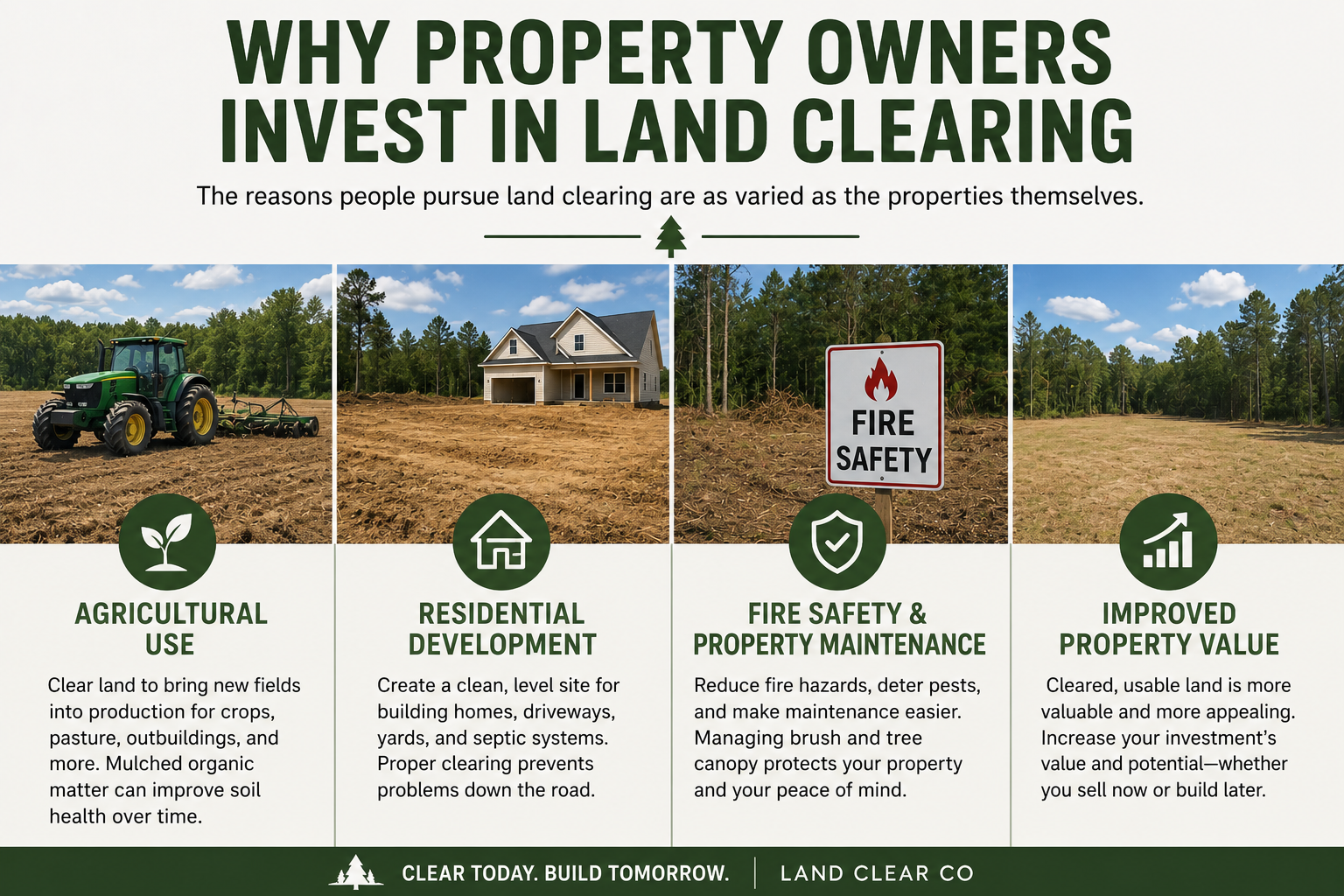
The reasons people pursue land clearing are as varied as the properties themselves.
Agricultural Use
Farm owners across the Raleigh NC area regularly clear land to bring new fields into production. Whether you’re growing crops, establishing pasture for livestock, or creating space for outbuildings, land clearing transforms unusable woodland into productive farmland. The organic matter left behind by forestry mulching can actually improve soil health over time—a bonus for agricultural applications.
Residential Development
Building a home or adding structures to your property requires a cleared site. But beyond the immediate building footprint, many homeowners want cleared space for yards, driveways, and septic systems. Proper land management during the clearing phase prevents problems down the road.
Fire Safety and Property Maintenance
Overgrown properties create fire hazards, especially during dry summers. Dense vegetation can also harbor pests and make regular property maintenance nearly impossible. Clearing brush and managing the tree canopy reduces these risks and makes ongoing land management much simpler.
Improved Property Value
Raw, overgrown land is worth less than cleared, usable property. Whether you’re planning to sell or simply want to increase your investment’s value, land clearing is one of the most impactful improvements you can make.
Understanding the Land Clearing Process
A successful land clearing project follows a logical sequence that protects both your property and your investment.
Site Assessment
Before any machinery arrives, a thorough assessment identifies the scope of work. This includes noting significant trees, evaluating terrain and drainage patterns, locating property boundaries, and identifying any utilities or easements. In the clay soils common around Raleigh, this assessment also considers how recent weather might affect ground conditions.
Vegetation Removal
The actual clearing work begins with removing brush and smaller vegetation, then moving to larger trees. The sequence and method depend on the approach chosen—forestry mulching handles everything in one pass, while traditional clearing might involve cutting, hauling, and then grinding stumps separately.
Debris Management
What happens to all that material? With forestry mulching, it becomes ground cover. Traditional clearing methods generate logs, brush piles, and stumps that need to be hauled away, burned, or chipped. Each approach has cost and time implications worth discussing upfront.
Site Preparation
Once vegetation is removed, the site may need additional work. Grading, drainage improvements, and erosion control often follow clearing. For agricultural land, this might include soil amendments or seedbed preparation.
Land Management Beyond the Initial Clear
Clearing land isn’t a one-time event—it’s the beginning of ongoing land management. Vegetation grows back, especially in North Carolina’s favorable climate. Species like Ailanthus altissima (tree of heaven) and Ligustrum sinense (Chinese privet) are aggressive colonizers that will reclaim cleared areas quickly without maintenance.
Planning for follow-up clearing, mowing, or selective herbicide application helps protect your initial investment. Many property owners schedule annual or bi-annual maintenance to keep their land in productive condition.
FAQ
Do I Need a Permit for Land Clearing on My Own Property?
The answer depends on several factors, and it’s not always straightforward. In Wake County and the Raleigh NC area, permit requirements vary based on the size of the area being cleared, proximity to streams or wetlands, whether the land is within city limits, and local zoning regulations.
Generally, small-scale clearing for personal use on rural property may not require permits. However, clearing near waterways often triggers erosion control requirements under state regulations. Clearing in municipal areas typically involves more oversight.
If your property falls within a watershed protection zone or contains wetlands, additional permits may be necessary. Clearing for commercial purposes or development usually requires site plans and permits regardless of location.
The safest approach is to check with your local planning department before beginning work. A quick phone call can prevent costly fines and project delays. We’re also happy to share what we know about local requirements based on our experience working throughout the region.
Ready to Clear Your Land?
If you’re a property owner or farm owner in Raleigh NC, Wake County, or the surrounding areas with land that needs clearing, we’d love to help. At Land Clear Co, we bring the equipment, experience, and understanding of local conditions to get your project done right.
Whether you need forestry mulching for overgrown acreage, excavation for a building site, or selective clearing to reclaim your property, we’re here to talk through your options and provide a straightforward estimate.
Give us a call or reach out through our website at landclearco.com to discuss your project. Let’s turn that overgrown property into something you can actually use.
