
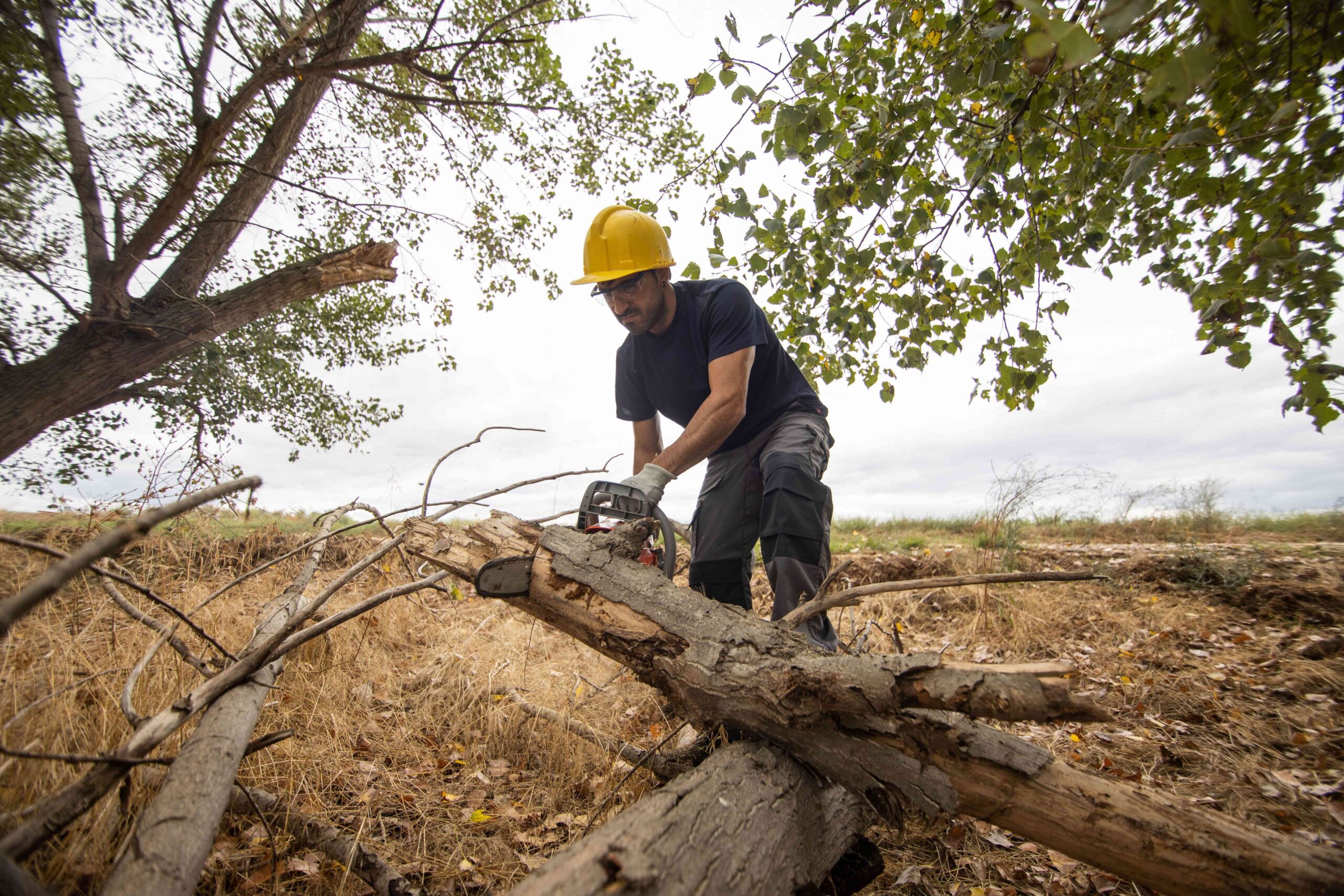
If you own hunting land in North Carolina, land clearing is one of the highest-return investments you can make in your property. The right clearing work transforms marginal timber into productive hunting land — creating food plots that concentrate deer, opening shooting lanes for clean shots, establishing access trails that let you move quietly to stand sites, and improving the overall habitat quality of your property.
Here’s how professional land clearing improves NC hunting properties, what the different clearing approaches accomplish, and how to plan the work for maximum hunting benefit.
Food Plot Establishment
Food plots are the foundation of managed whitetail hunting in North Carolina. A well-placed, properly cleared food plot draws deer consistently through the season — providing predictable movement patterns that make stand placement and hunting strategy much more effective.
Establishing a food plot from wooded or brushy land involves:
- Clearing the trees and woody vegetation from the plot area
- Grinding or removing stumps so the area can be worked with farm equipment
- Initial soil preparation — tilling, lime application, and fertilization based on soil test results
- Seeding with appropriate food plot mixes for NC’s climate and your target season (warm-season annuals like soybeans and corn for summer, cool-season blends like clover, chicory, and brassicas for fall)
Forestry mulching is ideal for food plot clearing because it grinds the vegetation and stumps into a mulch layer that decomposes quickly, adds organic matter to the soil, and doesn’t leave the windrow piles and debris fields that conventional clearing creates. After mulching, a plot can typically be tilled and seeded within the same season.
Food plot size matters. Most hunting consultants recommend minimum plot sizes of a half-acre to one acre for consistent deer use — smaller plots work, but deer will feed them out quickly. Long, narrow plots along field edges and creek bottoms are often more productive than large open plots because deer feel secure feeding in them.
Shooting Lane Clearing
Stand placement is everything in NC whitetail hunting, and shooting lanes are what make a good stand location huntable. A shooting lane is a cleared corridor through the woods that gives you a clean shot opportunity when deer move through the area.
Effective shooting lane work involves:
- Clearing understory brush and low branches along the shooting corridor without significantly disturbing the overstory canopy (deer feel exposed and avoid lanes cut wide-open through the timber)
- Creating multiple lanes at different angles from each stand site to cover likely approach routes
- Maintaining enough visual cover that deer moving through the lane don’t feel exposed
Forestry mulching is particularly effective for shooting lane work because the head can be controlled precisely — you can selectively grind the understory while leaving the timber canopy intact. The mulch layer left on the ground also muffles footsteps when you’re accessing the stand, which is an underappreciated benefit.
Access Trail Systems
How you get to your stand matters as much as where your stand is. Bumping deer on the way in ruins hunts and pressures the property. Well-designed access trails route hunters around bedding areas, keep movement downwind of key hunting zones, and allow quiet, efficient access even in the dark.
Trail clearing for hunting access typically involves:
- Clearing a path wide enough for comfortable walking (4-6 feet) without opening it so wide it becomes an obvious corridor deer learn to avoid
- Routing trails along topographic features — ridges, creek bottoms, field edges — that naturally channel hunter movement away from bedding areas
- Creating multiple access options to each stand so you can choose the best route based on wind direction
For ATV and UTV access, wider trails (8-10 feet) allow equipment access for food plot maintenance and deer recovery. These utility trails should be kept to the minimum necessary to avoid fragmenting habitat.
Stand Site Preparation
Ladder stands and box blinds need clear areas for installation, and hang-on stands need lanes cut for the climbing approach. Stand site prep typically involves clearing a small area around the base of the tree, removing branches that obstruct the shooting view, and clearing a quiet path to the tree base.
For ground blinds, clearing a small area of understory vegetation around the blind placement creates shooting lanes and allows brushing-in the blind with natural vegetation for concealment.
Habitat Improvement Clearing
Beyond hunting-specific improvements, selective clearing improves overall habitat quality in ways that benefit deer populations and hunting long-term. Thinning overcrowded timber stands increases sunlight reaching the forest floor, promoting native browse plants that deer prefer. Clearing dense monoculture pine stands creates edge habitat with diverse plant structure that benefits whitetails. Creating brushy thickets by hinge-cutting select trees provides bedding cover that keeps deer on the property year-round.
Timing Hunting Property Clearing in NC
In North Carolina, the best timing for hunting property clearing work is:
- Late winter/early spring (February-April) — After the season ends and before nesting season begins. Time to establish summer food plots. Ground disturbance has time to settle before fall.
- Summer (June-August) — Food plot maintenance clearing, trail brushing, and stand site work that doesn’t significantly disturb the property before the fall season.
- Avoid August-September — Too close to the fall season. Significant clearing work during late summer can pressure deer and alter movement patterns right before you want to hunt.
Land Clearing for NC Hunting Properties — Land ClearCo
Land ClearCo works on hunting property improvement projects throughout eastern and central North Carolina — food plot establishment, shooting lane clearing, trail systems, and habitat improvement clearing on whitetail hunting properties from the Piedmont to the Coastal Plain.
We use forestry mulching equipment that’s well-suited to the precision work that hunting property improvement requires — selective clearing that improves the property without over-disturbing it. If you’re ready to improve your NC hunting land, get an instant estimate online or call us at 984-224-7995.
