
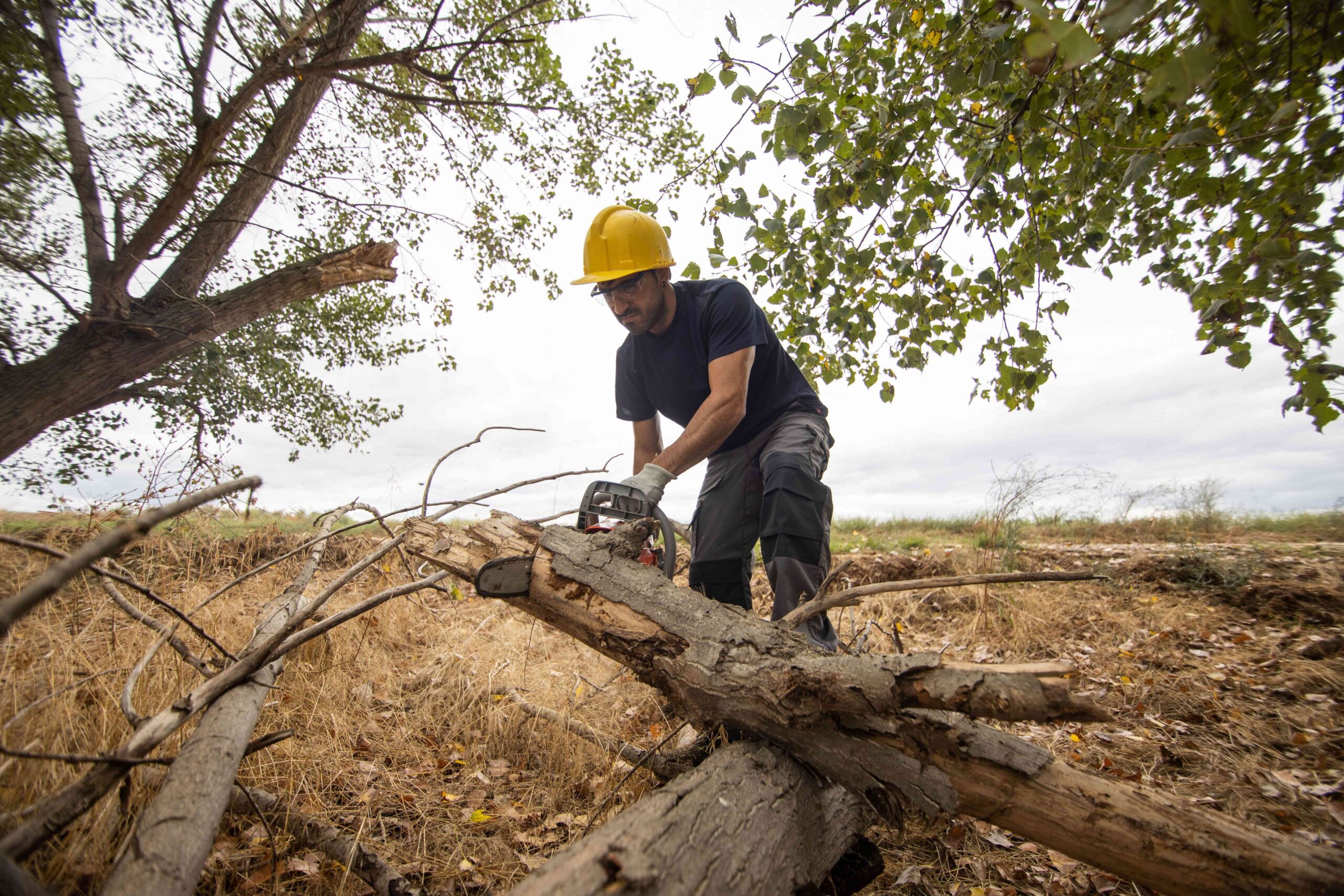
Fence line clearing is one of the most common land maintenance jobs in North Carolina — and one of the most consistently neglected. A fence line that was clear when it was first installed can become a dense wall of privet, honeysuckle, briars, and volunteer trees within just a few years if it isn’t maintained. Once it gets away from you, clearing it back out is a real job.
Here’s a straightforward guide to what fence line clearing involves in NC, what it typically costs, and how to get the best result.
What Is Fence Line Clearing?
Fence line clearing removes the brush, vines, saplings, and woody growth that have established along a fence boundary — whether that’s a property line fence, a pasture fence, a farm perimeter, or a road-frontage line. The goal is to expose the fence, restore visibility along the boundary, and eliminate the vegetation that damages fencing and creates access and maintenance headaches.
On rural properties in Wake, Johnston, Chatham, Vance, and surrounding North Carolina counties, fence lines are a constant maintenance challenge. The combination of fertile piedmont soil, generous rainfall, and aggressive invasive species like privet, kudzu, and multiflora rose means that vegetation pressure on fence lines is relentless.
What Does Fence Line Clearing Cost in NC?
Fence line clearing is typically priced by the linear foot or by the hour, depending on the contractor and the complexity of the job. Here are realistic ranges for North Carolina:
- Light maintenance clearing (annual or biennial maintenance, brush under 2 inches): $1.50 – $3.00 per linear foot
- Moderate clearing (established brush and saplings up to 4-6 inches, some vines): $3.00 – $6.00 per linear foot
- Heavy reclamation clearing (overgrown for years, privet or kudzu infestations, trees mixed in): $6.00 – $12.00+ per linear foot
- Minimum job charge: $500 – $1,000 for most contractors
A typical rural property with 1,000 linear feet of moderately overgrown fence line runs $3,000 – $6,000 for a thorough clearing. Heavy infestations on neglected fence lines can run higher.
What Drives the Price Up or Down
How long since the last clearing
This is the biggest cost driver. A fence line that gets cleared every year or two stays manageable and cheap to maintain. A fence line that hasn’t been touched in 5-10 years may have trees 6-8 inches in diameter growing through the wire, established privet root systems, and decades of accumulated debris — that’s a reclamation job, not a maintenance job, and it costs accordingly.
Species composition
Not all fence line vegetation is equal. Honeysuckle and grass are fast to clear. Privet, kudzu, and multiflora rose are slow, dense, and often require multiple passes. Mature trees growing into the fence require individual attention and add time to the job.
Fence type and condition
Clearing around a barbed wire fence requires more care than clearing along an open property line. Old or deteriorated fencing that requires working around without damaging adds time. Woven wire or high-tensile fence with heavy vegetation grown through it is the most time-consuming scenario.
Width of clearing
A standard fence line clearing typically covers 10-15 feet on each side of the fence. If you want a wider clearing — for visibility, maintenance access, or to eliminate the regrowth buffer — that increases the linear footage effectively and raises the cost.
Forestry Mulching vs. Manual Clearing for Fence Lines
Two main approaches exist for fence line clearing in NC:
Forestry mulching uses a tracked mulching machine to grind vegetation directly into mulch along the fence corridor. It’s fast, efficient, and leaves no debris piles. The mulch layer also suppresses regrowth better than manual clearing. The limitation is that mulching equipment needs to work carefully around the fence itself — experienced operators handle this routinely, but it requires attention.
Manual or mechanical brush cutting (using brush hogs, skid steers with brush attachments, or hand crews) is more precise around the fence line itself but often leaves cut material on the ground that needs to be dealt with separately.
For most fence lines in NC that haven’t been maintained in more than 2-3 years, forestry mulching is the faster and more cost-effective approach. For annual maintenance on clear fence lines, a brush hog pass is often sufficient.
Maintaining Fence Lines After Clearing
The best time to establish a maintenance routine is right after a full clearing. Once the fence line is clean, keeping it that way costs a fraction of reclaiming it from scratch.
- Annual or biennial mowing or brush cutting keeps light regrowth manageable
- Spot herbicide treatment on privet and kudzu regrowth prevents re-establishment of the worst species
- A cleared fence line is also much easier to inspect for damage, missing staples, and wire issues
Fence Line Clearing in the Triangle and Surrounding NC Counties
Land ClearCo handles fence line clearing throughout Wake, Durham, Johnston, Chatham, Harnett, Vance, Franklin, and surrounding North Carolina counties. We use forestry mulching equipment that efficiently clears fence line corridors without the debris hauling and secondary cleanup that conventional clearing methods require.
Whether you need a one-time reclamation clearing on a long-neglected fence line or a maintenance clearing to keep a property boundary clean, we can help. Get an instant estimate online or call us at 984-224-7995.
