
How to Prepare Your Land for a New Home Build in North Carolina

Buying land and building your own home in North Carolina is one of the most rewarding things a property owner can do — but the gap between raw land and a ready-to-build site is bigger than most people expect. Land preparation is its own phase of the project, and doing it right from the start prevents expensive problems down the road.

Here’s a practical guide to what land preparation for a new home build actually involves in NC, in the order it typically needs to happen.

Step 1 — Survey and Stake the Property

Before any clearing happens, you need to know exactly where your property lines are, where the building setbacks fall, and where any easements or right-of-ways are located. A licensed surveyor stakes the corners and marks the setbacks. This isn’t optional — without it, you risk clearing land you don’t own or clearing inside a setback and having to restore it later.

If you’re in a county that requires a soil and erosion control permit for land disturbance (most NC counties require this for disturbances over one acre), the survey is also needed for the permit application.

Step 2 — Soil and Percolation Testing

If you’re on a well and septic system — which most rural and semi-rural NC properties are — you need a soil scientist or county environmental health officer to evaluate the soil before you do anything else. The perc test determines whether the soil can support a septic system, and where the drain field can be located. This dictates where your house can sit on the lot.

Do this before clearing. If the soil test comes back with a restricted site, you want to know before you’ve invested in clearing the whole property.

Step 3 — Land Clearing

Once you know where the house, driveway, and septic system go, you can clear with precision. A good land clearing contractor doesn’t just bulldoze everything — they work with you to identify which trees are worth saving (mature shade trees near the house site, specimen trees that add value and character to the finished property) and clear everything else cleanly.

For most NC homesite clearing projects, the options are:

  • Conventional clearing — Trees are cut, stumps are ground or pulled, debris is piled and burned or hauled away. Creates a completely clean slate but generates significant debris and leaves bare soil vulnerable to erosion.
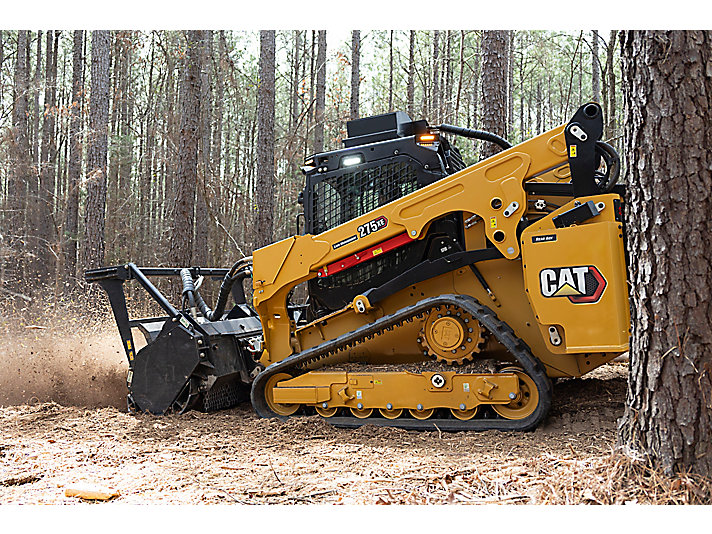
  • Forestry mulching — A mulching machine grinds trees, brush, and stumps in a single pass, leaving a mulch layer on the ground. No burn piles, no hauling, no bare soil. The mulch layer protects the ground until final grading. Typically faster and less expensive than conventional clearing for most homesite projects.

Clearing should include the house footprint, driveway corridor, septic drain field area, and a reasonable yard perimeter. Don’t clear more than you need to — leave as much mature tree cover as possible outside the active work zones.

Step 4 — Erosion and Sediment Control

North Carolina’s Sedimentation Pollution Control Act requires erosion and sediment control measures on any land disturbance over one acre. Even on smaller projects, proper erosion control is critical to protect neighboring properties, waterways, and your own investment.

Standard measures include silt fencing around the disturbed area, sediment basins at low points, rock check dams in drainage swales, and erosion control matting on slopes. Your builder or grading contractor will typically pull the required permits and install the measures, but you should understand what’s required before work begins.

Step 5 — Grading and Rough Earthwork

After clearing, the site needs to be graded to create a stable building pad, establish proper drainage away from the house footprint, and prepare the driveway corridor. This is where your site prep contractor shapes the land for what’s being built on it.

Key elements of rough grading include:

  • Establishing the building pad elevation (the finished floor height needs to be above the 100-year flood plain in many areas)
  • Rough-grading the driveway from the road to the house pad
  • Identifying and addressing drainage problem areas before construction begins
  • Setting up utility corridor access for power, water, and gas

Step 6 — Utility Coordination

Call 811 (NC 811 — “Call Before You Dig”) before any excavation. The state’s underground utility notification service marks the location of buried utilities at no cost. This is legally required before digging in NC.

For rural properties on well and septic, coordinate the well drilling and septic system installation early — these often have long lead times in busy seasons, and the septic drain field installation may need to be coordinated with grading sequencing.

Step 7 — Driveway Base and Final Grading

Before your builder breaks ground, the driveway should be at minimum rough-graded and have a stable base installed — typically crushed stone or road base — so equipment can access the site without damaging the driveway in wet conditions. Final driveway paving or gravel finish typically happens later in the build process.

Common Mistakes to Avoid

  • Clearing before the perc test — If the site doesn’t perk where you planned, you may need to reconfigure the whole layout.
  • Over-clearing — Removing mature trees that you’ll wish you’d kept once the house is built is a difficult mistake to undo.
  • Skipping erosion control — Even on projects under the permit threshold, bare soil on a NC Piedmont lot during a rain event can create significant problems quickly.
  • Not confirming setbacks before clearing — County and municipal setback requirements vary widely across NC. Know them before you cut anything near the property line.

Land Clearing for New Home Sites in NC — Land ClearCo

Land ClearCo handles new homesite clearing throughout the Raleigh–Durham Triangle and surrounding counties in North Carolina. We work on projects of all sizes — from half-acre residential lots to multi-acre rural homesites — using forestry mulching and conventional clearing methods matched to the specific needs of each project.

We’re familiar with the county-specific permitting, setback, and erosion control requirements across Wake, Durham, Orange, Chatham, Johnston, Harnett, Vance, and surrounding counties. If you’re planning a new home build and need to prepare your land, get an instant estimate online or call us at (919) 626-6207.

Share

More Posts